
Why 120°F is the default recommendation
The U.S. Department of Energy and most safety guidance point to 120°F as the sweet spot for a home water heater. At that temperature, water is hot enough for showers, dishes, and laundry, while the scald risk stays manageable and standby energy loss is lower than at higher settings.
Every increase above 120°F costs more to maintain and shortens the time it takes for hot water to cause a burn. That trade-off is the heart of the setting decision.
When homes go higher — and the catch
Some households raise the setting toward 130 to 140°F for large simultaneous demand, or to reduce the risk of Legionella and other bacteria that can grow in cooler tanks. That is a legitimate reason, but it comes with a real scald hazard: at 140°F, water can cause a serious burn in seconds, which matters in homes with children or older adults.
The common way to get the benefits of a hotter tank without the scald risk at the tap is a thermostatic mixing valve, which stores water hot but delivers it at a safer temperature. If you are considering a higher setting, it is worth discussing that safeguard.
When the setting is not the real problem
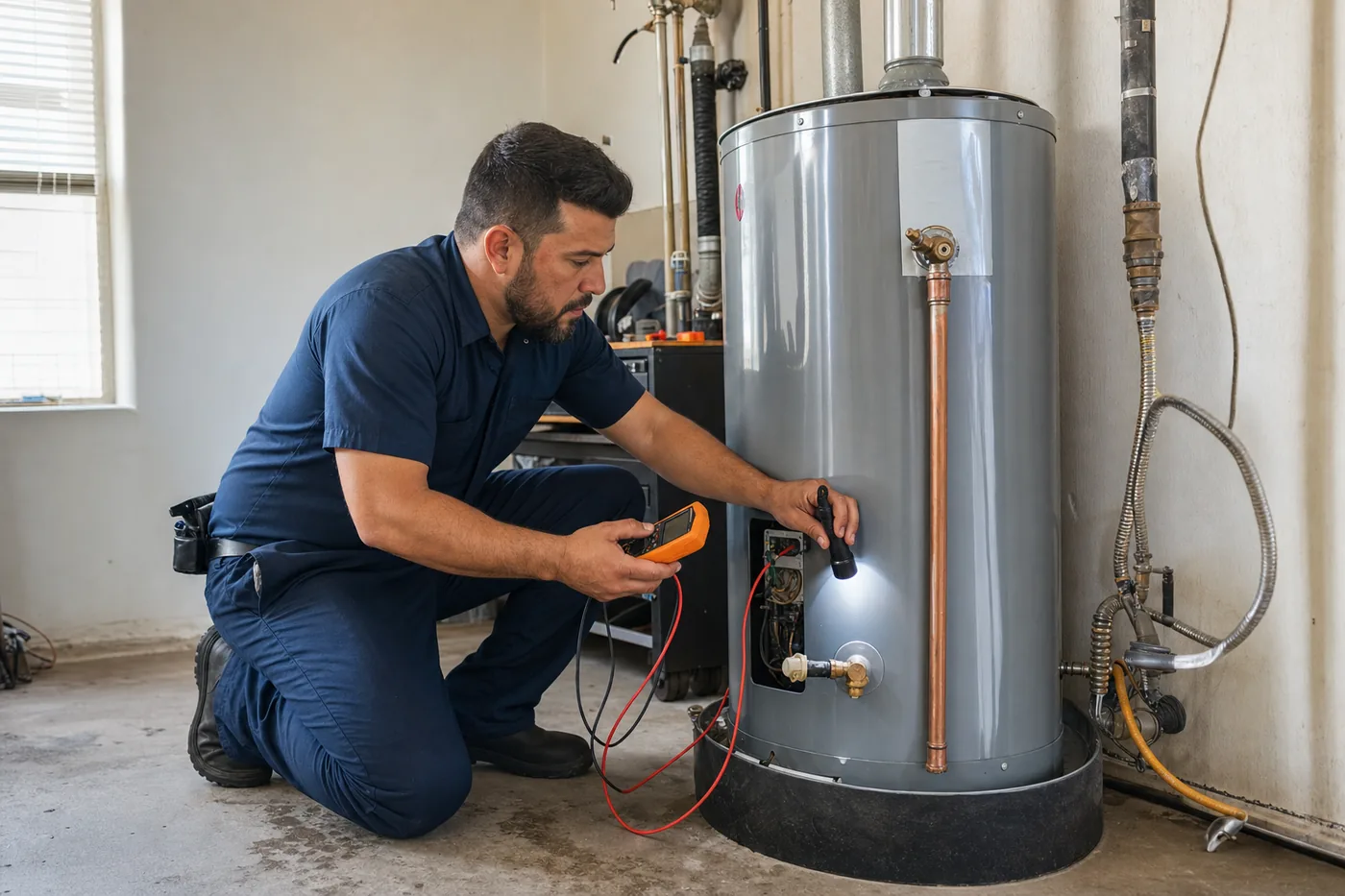
If you cannot get comfortable hot water even at a reasonable setting, or the temperature swings during a shower, the dial is usually not the culprit. A failed heating element, a drifting or failed thermostat, a broken dip tube, or heavy sediment can all cause lukewarm or unstable hot water.
That is a diagnostic question, not a settings question. Our 'not enough hot water' page walks through the common causes, and a quick test can separate a simple setting change from an actual repair.
Sources and further reading
- U.S. Department of Energy: residential water-heater temperature guidance
- CDC: preventing waterborne germs at home
Equipment-specific instructions and warranty requirements vary by model. Use the manufacturer manual for the installed unit.