Match the sound to a cause
Popping and rumbling usually mean sediment; ticking is often normal expansion; screeching suggests a restricted valve.

Popping, rumbling, and sediment
Most water-heater noise is sediment or mineral scale — a real issue in the Permian Basin's hard water. We identify the sound, the cause, and whether flushing or repair is the fix.
Prepared by the Resolv Services LLC plumbing team · Updated July 2026
Tell us what is happening. Resolv will call you back.
Popping or rumbling commonly develops when sediment or mineral scale collects in a tank and heats unevenly, but the sound alone does not confirm the cause. A plumber should consider the sound, tank age, condition, temperature, valves, and maintenance history before recommending flushing or replacement.
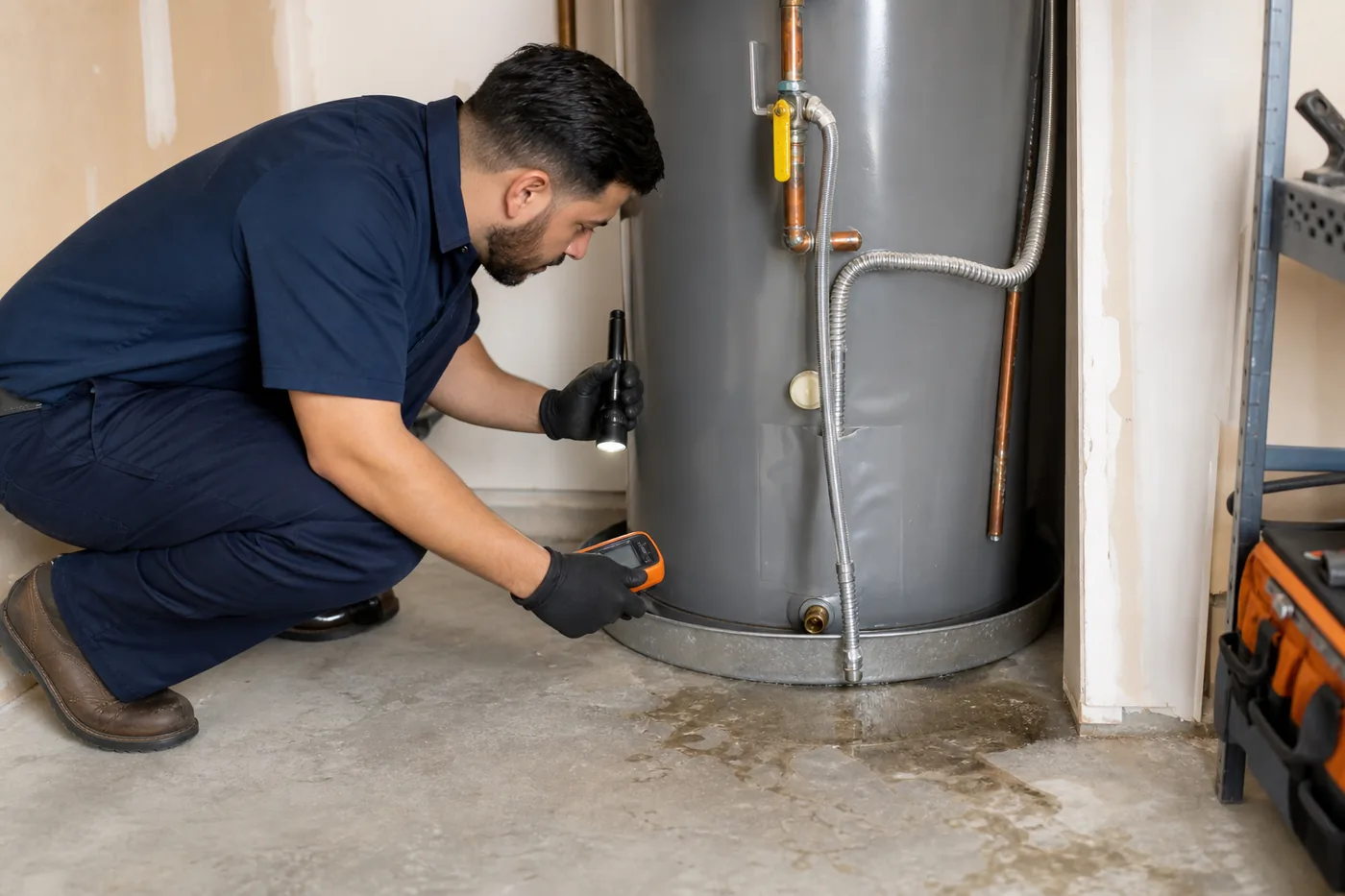
Identify the sound
Most water-heater noise is sediment or mineral scale — a real issue in the Permian Basin's hard water. We identify the sound, the cause, and whether flushing or repair is the fix.
Popping during burner operation commonly fits sediment heating unevenly on the tank bottom. A ticking pipe during warm-up can instead be ordinary expansion against framing or supports.
Conditions this page covers
Listen, inspect, then service
Popping and rumbling usually mean sediment; ticking is often normal expansion; screeching suggests a restricted valve.
Check sediment load, anode condition, temperature, and whether flushing is safe on an older tank.
Perform appropriate maintenance, replace failed parts, or explain when a heavily scaled tank is near the end of its life.
Flush or evaluate the tank
Use the confirmed equipment condition and complete scope—not a generic shortcut—to choose the next step.
Sediment popping often improves after a proper flush, especially when it is caught early.
Years of hardened sediment can accelerate corrosion; on an old tank, flushing may even reveal a leak.
What Odessa homeowners say
Was a fantastic first visit. The technicians were professional, friendly, and explained the issue with the water heater well. We are very happy with the service.
Our water heater started leaking in the middle of the night. Lex came out immediately and extended himself to get the job done. Outstanding emergency response.
Jackson was here working on putting in a water heater. Very professional and knowledgeable, and the work was done right.
Straight answers
Popping from sediment is not usually an immediate hazard, but it lowers efficiency and shortens tank life and should be checked.
Often yes, if sediment is caught early. Heavily calcified tanks may not fully quiet down and can be near replacement.
West Texas hard water deposits calcium and magnesium scale faster than in soft-water regions, so tanks build sediment sooner.
Water Heater Noise Diagnosis in Odessa
Call Resolv or send the short form. Get the scope and price before work starts.